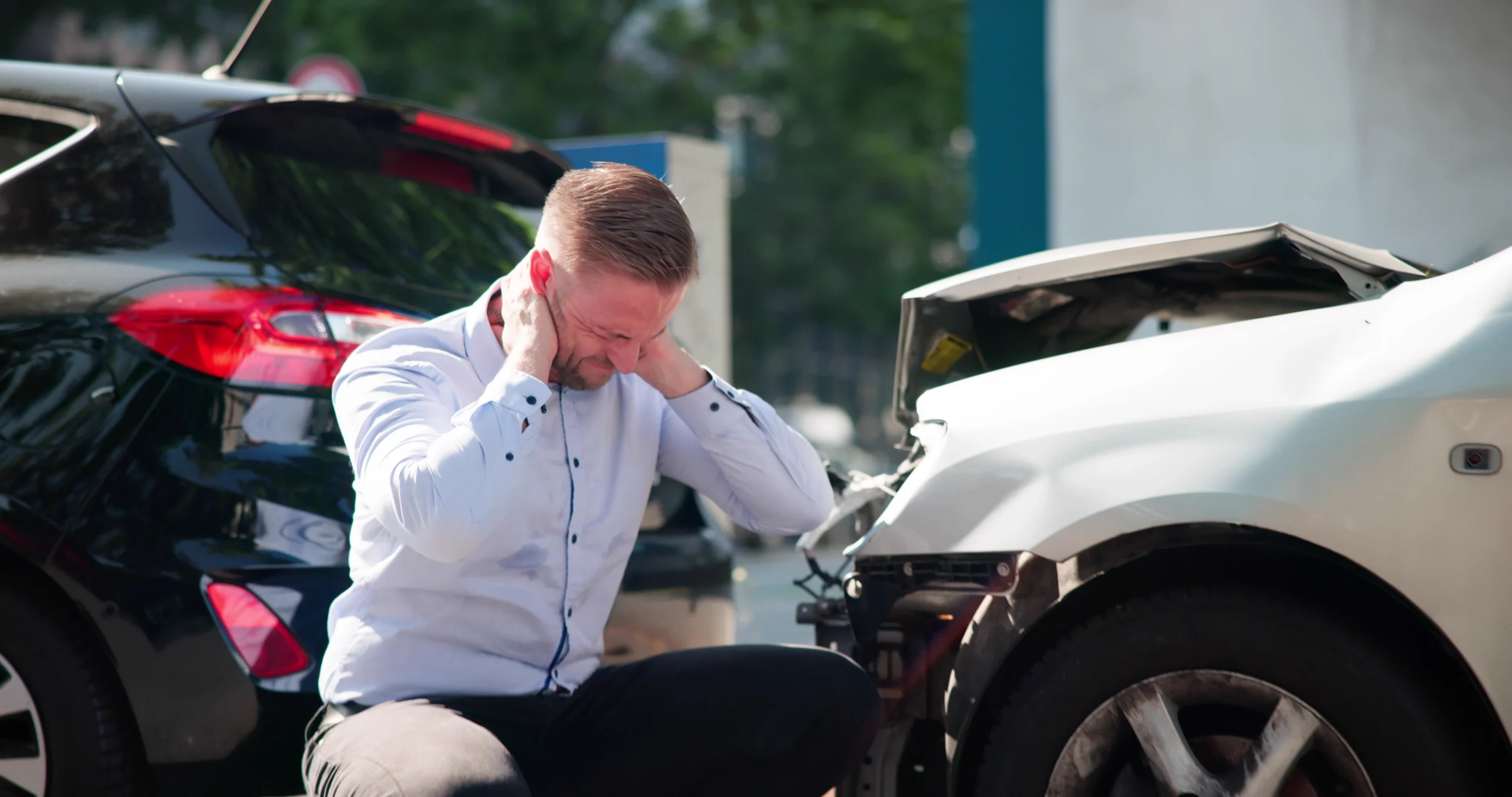
In California, the driver who caused the crash is responsible for your property damage, and their property damage liability insurance is supposed to pay for repairs, towing, storage, and a rental car. When that coverage is too small, disputed, or missing entirely, you can turn to your own collision coverage, uninsured motorist property damage coverage, or a lawsuit against the driver. Which route makes sense depends on fault, policy limits, and how quickly you need your car back.
That is the short answer. The longer answer matters, because the moment your car lands in a body shop lot, you start learning that "the at-fault driver pays" is a rule on paper that insurers bend in practice. Adjusters stop calling back. Estimates come in low. Sometimes the other driver has no insurance at all. This guide walks through every realistic path to getting your vehicle fixed or replaced in California, and what to do when the obvious path is blocked.
California Is a Fault State: The Driver Who Caused the Crash Pays
California uses a traditional fault-based, or "tort," system for car accidents. Whoever's negligence caused the collision is financially responsible for the damage that followed: the crumpled bumper, the cracked windshield, the bent frame.
Where the Money Actually Comes From
The at-fault driver almost never pays out of pocket. Instead, the money comes from the property damage liability (PDL) portion of their auto policy. Every insured California driver carries it, and it pays for whatever the driver hits, whether that is your car, a light pole, or a backyard fence.
The advantage for you is that you can file a third-party claim directly with the other driver's insurer. You do not have to run the claim through your own policy or pay your deductible. If the other driver accepts fault and the policy limit is large enough, their carrier pays your body shop directly.
Why "No-Fault" Doesn't Apply Here
People who move to Los Angeles from states like Florida, Michigan, or New York sometimes expect a "no-fault" system. California never adopted one. And even in no-fault states, the no-fault rules mainly exist to speed up payment of medical bills through Personal Injury Protection (PIP). Vehicle damage still generally runs through the at-fault driver's liability coverage. In California, for both injuries and property, you look to the driver who caused the wreck.
Shared Fault Shrinks Your Payment
Real crashes are rarely one-sided. California follows pure comparative negligence, which means fault is divided by percentage and your recovery drops by whatever share is assigned to you.
Picture two cars squeezing into the same space while merging onto the 405. They scrape doors. After reviewing dashcam video, the other driver's adjuster decides you were 20% responsible for lingering in a blind spot. If your repair estimate is $10,000, their insurer now offers $8,000, and you cover the other $2,000 yourself or through your collision coverage.
From the insurer's side of the desk, this is one of the easiest ways to cut a payout. Moving 10 or 15 percent of the fault onto you costs them nothing and saves them real money, so expect them to look for it. If more than two vehicles were involved, allocating fault gets even more complicated; we explain that process in our guide to how fault is determined in a multi-car pileup.
How Much the At-Fault Driver's Policy Will Really Pay
Getting the other carrier to accept liability is only half the battle. The other half is whether the policy has enough money in it to cover your loss.
The New 30/60/15 Minimums
For decades, California allowed drivers to carry only $5,000 in property damage liability, a limit that dated back to 1967. That amount barely covers a modern bumper packed with sensors.
Senate Bill 1107 raised the floor. For policies issued or renewed on or after January 1, 2025, California drivers must carry at least:
- $15,000 in property damage liability
- $30,000 for bodily injury to one person
- $60,000 for bodily injury per accident
Tripling the property damage minimum helps, but $15,000 is still just the legal minimum. Many drivers carry exactly that and nothing more.
When Your Loss Is Bigger Than Their Limit
Today's cars are expensive to fix. Radar units live in bumpers, cameras sit behind windshields, and aluminum body panels cost far more than the steel they replaced. On a newer EV or well-equipped SUV, replacing a bumper and recalibrating the driver-assistance sensors can reach five figures. If the car is totaled, a $15,000 limit may not come close to paying off the loan.
Pileups make it worse. If one driver's $15,000 limit has to be split among three or four damaged vehicles, each owner may receive only a fraction of their loss. And once the insurer pays out its full policy limit, its obligation ends, no matter how much you are still owed. That is why the next options matter.
Using Your Own Insurance to Get Moving
If the other carrier is stalling, disputing fault, or simply doesn't have enough coverage, you do not have to wait on them.
Collision Coverage Pays Regardless of Fault
Collision coverage on your own policy repairs or replaces your vehicle no matter who caused the crash. You open the claim, your car goes into the shop, and your insurer deals with the other side. The trade-off is your deductible, commonly $500 or $1,000, which you pay up front so repairs can start.
Subrogation: Getting Your Deductible Back
After your insurer pays for the repairs, it pursues the at-fault driver's insurer to recover what it spent. This process is called subrogation, and it happens behind the scenes without extra paperwork from you. When your insurer recovers, it typically reimburses your deductible as well (reduced by any percentage of fault assigned to you).
For many drivers, this is the most practical route: the car is fixed quickly, and if the other driver is clearly at fault, the deductible eventually comes back.
When the Other Driver Has No Insurance
Subrogation only works if there is a policy to recover from. According to the Insurance Information Institute, roughly 17% of California drivers are uninsured, about one in six cars on the road. When one of them hits you, "their insurance pays" is off the table. For the full picture, see our guide to an uninsured driver collision.
Uninsured Motorist Property Damage (UMPD): Limited, With a Catch
California insurers must offer uninsured motorist property damage coverage, though you can decline it in writing. According to the California Department of Insurance, UMPD pays up to $3,500 toward your vehicle damage.
The key limitation is that the uninsured driver must be identified.
- Covered: An uninsured driver rear-ends you at a light and stays to exchange information.
- Not covered: The driver takes off before you can get a plate number or photo.
If you already carry collision coverage, UMPD adds relatively little. Collision pays for the actual repair cost, not a capped amount, and it applies whether or not the other driver stayed at the scene. If you were hit by someone who fled, our guide on what to do after a hit and run covers the next steps.
Suing the Driver Personally
If the driver was uninsured and you have neither collision nor UMPD, the remaining option is a lawsuit against the driver. California small claims court lets individuals sue for up to $12,500 without a lawyer. Larger claims go through a regular civil case.
Winning is often the easy part, since many uninsured defendants never show up and the court enters a default judgment. Collecting is the hard part. If the driver has no wages to garnish and no property to place a lien on, a judgment may be worth very little in practice.
When a Car Hits a Fence, Wall, Storefront, or Parked Car
Not every property damage claim involves two moving cars. The fault rules are the same no matter what was struck: whoever caused the damage is responsible for it.
Liability Coverage Pays for More Than Vehicles
If a driver takes a curve too fast and knocks down your retaining wall, or a delivery van jumps the curb and shatters your shop window, their PDL coverage is the source of payment. You file against their policy the same way you would for a fender-bender, and the claim can include the structural repair, permit fees, and damaged inventory.
When the Driver Disappears
If the driver who hit your wall or storefront flees and can't be identified, there is no auto policy to claim against. You will usually need to go through your homeowners or commercial property insurance and pay that policy's deductible.
Parked cars work the same way. If your car is sideswiped overnight by an unknown driver, UMPD won't apply because the driver isn't identified, so collision coverage is typically the only way to get the repair paid.
Towing, Storage, Rental Cars, and Other Costs
A property damage claim covers more than parts and labor. Depending on the facts, it can include:
- Loss of use (rental car): While your car is being repaired or the insurer decides whether it's a total loss, the at-fault carrier generally owes you a comparable rental. If they wrecked your family SUV, a compact economy car isn't a fair substitute.
- Towing and storage: Tow yards charge daily storage fees that add up quickly. Those charges belong in the property damage claim.
- Personal items in the car: A damaged car seat, laptop, or phone can be part of the claim.
- Your choice of body shop: Insurers often steer drivers toward "preferred" shops that have agreed to lower labor rates. Under California law, you have the right to choose your own repair shop, and the insurer still has to pay a reasonable repair cost.
Steps That Protect Your Property Damage Claim
The choices you make in the first few days after a crash shape how smoothly the vehicle claim goes. A few practical habits make it much harder for an insurer to delay or discount your claim:
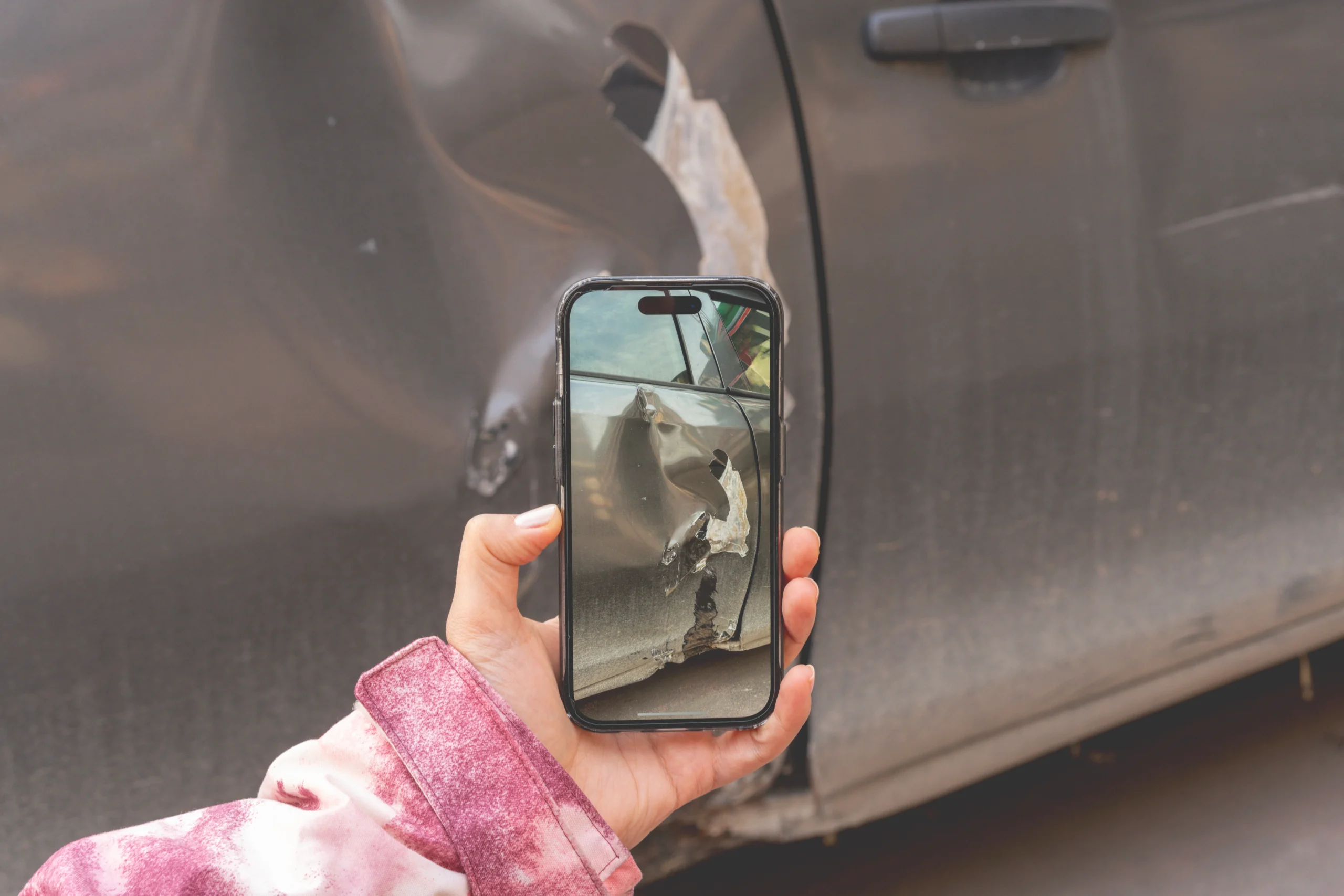
- Photograph everything before the car is moved or repaired. Capture all sides of each vehicle, close-ups of damage, the interior, the odometer, and any damage to nearby property. Once repairs start, that evidence is gone.
- Get the other driver's insurance information in writing. A photo of their insurance card and driver's license is ideal. If they refuse or have none, note their plate number and call the police.
- Report the claim promptly. Notify both the at-fault driver's insurer and your own. Reporting to your own carrier does not automatically mean you are using your collision coverage, but it keeps that option open.
- Get your own written estimate. A detailed estimate from a shop you trust gives you something concrete to compare against the insurer's appraisal, line by line.
- Keep every receipt. Towing invoices, storage bills, rideshare fares, and rental agreements all belong in the claim, but only if you can document them.
- Be careful what you say about fault. A casual comment to an adjuster such as "I didn't see them" can later be used to assign you a percentage of blame. Stick to the facts.
- Don't let storage fees pile up. Ask the insurer to move the car to a shop or its own facility quickly, and put that request in writing so the delay isn't charged to you.
If the insurer declares your car a total loss, ask how it calculated the actual cash value and which comparable vehicles it used. Comparables that are older, higher-mileage, or located far from Los Angeles can drag the number down, and you are entitled to challenge them with your own listings of similar cars for sale locally.
How Insurers Value Vehicle Damage: The Insider View
Our founding attorney, Shawn Rokni, previously worked as a senior insurance defense attorney and as in-house counsel for a major auto insurer. That background gives our firm a clear view of how property damage numbers are built on the other side.
The first estimate you receive is rarely a straight reflection of what a quality shop would charge. Adjusters commonly run repair figures through third-party estimating tools and internal guidelines that can:
- Substitute cheaper aftermarket or generic parts for original manufacturer (OEM) parts
- Leave out the value of upgrades such as custom wheels or suspension work
- Apply labor rates below what established Los Angeles body shops actually charge
Insurers may also push to declare a car a total loss when it can reasonably be repaired, because paying a low market value can cost them less than paying for specialized labor and sensor recalibration. None of this means every adjuster is acting in bad faith. It does mean the first number is an opening position, not the final word. The same logic applies to injury claims, which is why we also wrote about insurance valuation software and how it can undervalue a claim.
Property Damage vs. Injury Claims After the Same Crash
If you were hurt as well, you will usually have two claims: one for the vehicle and your belongings, and one for your medical bills, lost income, and pain and suffering. They are evaluated separately and can settle at different times. When we handle a client's car accident injury claim, we also press the insurer to resolve the vehicle side promptly so you are not left without transportation while the injury claim develops.
Good documentation helps both claims. Photos of the vehicles, the scene, and any damage to the surroundings can make a real difference later; our car accident evidence guide explains what to collect.
Don't Forget the DMV Report
Separate from any police report or insurance claim, California requires drivers to report a crash to the DMV on an SR-1 form within 10 days if it caused more than $1,000 in property damage or any injury or death. Given current repair costs, most crashes that require a body shop visit meet that threshold.
Talk to Our Team About Your Property Damage Dispute
Who pays for your car usually comes down to fault, coverage limits, and how quickly the insurer decides to act. When an adjuster lowballs your repair, inflates your share of fault, or an uninsured driver leaves you with the bill, it helps to have someone who understands how insurers approach these claims. If your vehicle claim is tied to an injury from the same crash, contact Insider Accident Lawyers for a free case review or call (213) 322-0609. Our office is at 3435 Wilshire Blvd, Suite 1620, in Los Angeles, and you pay no attorney's fee unless we recover compensation for you.