The short answer
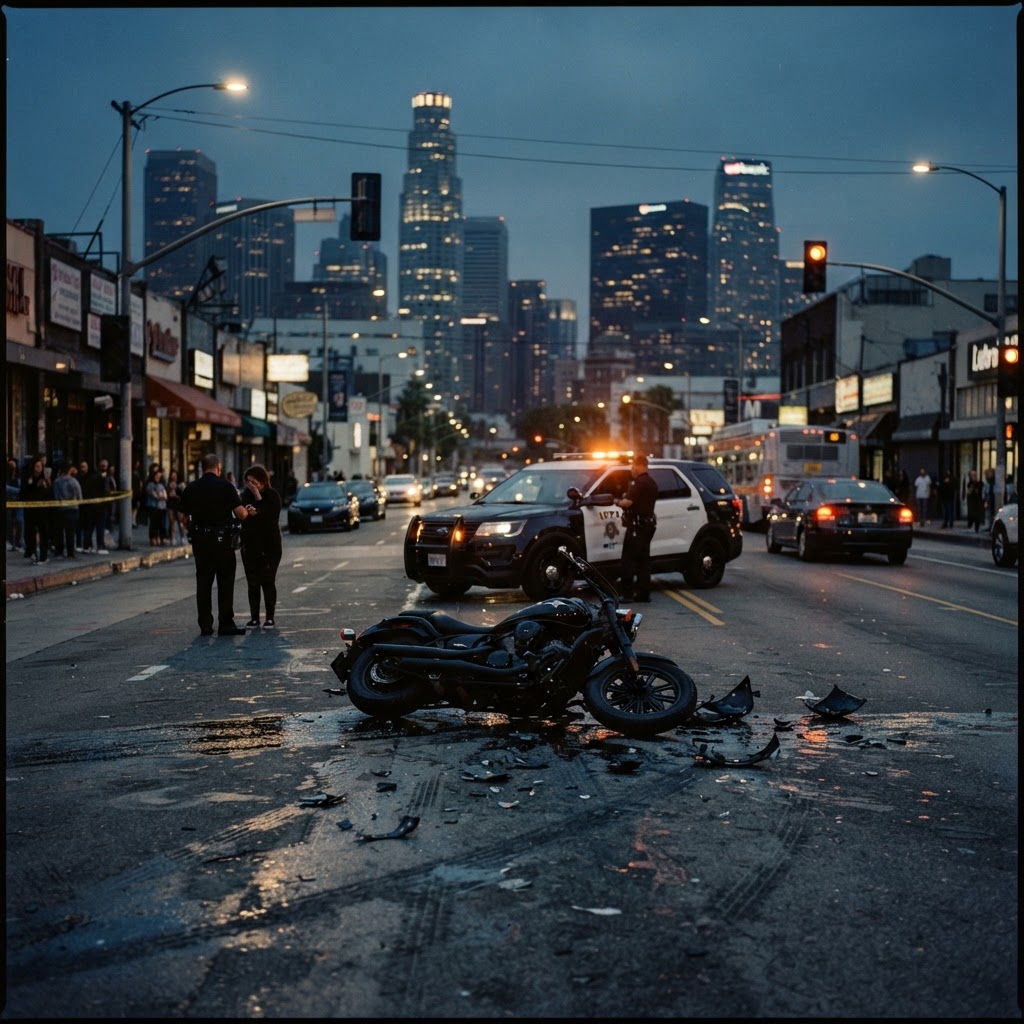
Motorcycle accident victims in California can recover compensation even if they were partly at fault, under pure comparative negligence. Riders have the same rights as drivers (CVC § 21200). You generally have two years to file (CCP § 335.1). Wear protective gear, preserve evidence, and consult a lawyer before accepting any settlement.
Riders in Los Angeles know the risks. Drivers drift into lanes without looking on the 405, turn left across your path on Ventura Boulevard, and open doors into traffic in Silver Lake. On the canyon roads like Mulholland Highway and Angeles Crest, blind curves and loose gravel add their own hazards. When a car and a motorcycle collide, the rider has no steel frame or airbags, so injuries are often serious even at moderate speeds.
There is another risk riders face after a crash: bias. Adjusters, and sometimes jurors, may assume a motorcyclist was speeding, weaving, or showing off. When our founding attorneys worked on the insurance defense side, we saw how that assumption crept into fault assignments and settlement ranges. Today we use that insight to anticipate the bias and meet it with evidence about how the crash actually happened.
California expressly defines lane splitting in its Vehicle Code, and lane splitting is not automatically negligent. Helmet use is required, and insurers often raise helmet questions to reduce what they pay. We know how these arguments are framed and how to respond to them with facts, medical evidence, and reconstruction where needed.
Your consultation is free, and you pay no attorney's fee unless we recover compensation for you. If you were injured riding in Los Angeles, talk with us before you speak to the driver's insurer or agree to a settlement.
From the other side of the table
How the insurer's adjuster sees a motorcycle claim
The reckless-rider assumption
Adjusters often begin from the idea that riders take risks. We counter that assumption with video, witness accounts, and physical evidence showing your speed, lane position, and the driver's failure to see you.
Lane splitting used as a fault argument
If you were splitting lanes, the insurer may claim that alone makes you at fault. California law recognizes lane splitting, and we focus on whether your riding was reasonable under the conditions at the time.
Helmet and gear arguments
The insurer may claim your injuries would have been less severe with different gear or a different helmet. We examine whether that argument has any medical or factual basis for your specific injuries.
The 'I never saw him' defense
Drivers often say the motorcycle came out of nowhere. That statement is frequently an admission that the driver did not look carefully. We use sight-line analysis and scene evidence to show that you were there to be seen.
Why it happens
Common causes
Left turns in front of riders
A driver turning left across oncoming traffic at intersections like Sepulveda and Ventura or along Santa Monica Boulevard may misjudge a motorcycle's speed or fail to see it entirely.
Unsafe lane changes
Drivers who do not check mirrors or blind spots before changing lanes on the 101, the 405, and the 5 can sideswipe riders or force them off the road.
Lane-splitting conflicts
Drivers who suddenly change lanes or open a door in slow traffic can strike a rider who is lawfully lane splitting.
Dooring
Parked drivers who open doors without looking can cause riders to crash on streets with parallel parking, such as in Hollywood, Koreatown, and Venice.
Rear-end impacts
Following drivers who are distracted may not stop in time for a motorcycle waiting at a light or slowing in traffic.
Road hazards
Potholes, uneven pavement, debris, and gravel on canyon roads pose a much greater danger to a two-wheeled vehicle than to a car.
What we see
Injuries we handle
What you may recover
Compensation in a California claim
Medical and surgical costs
Emergency care, orthopedic surgery, skin grafts, physical therapy, and future procedures such as hardware removal or joint replacement.
Lost wages and earning capacity
Income lost during a long recovery and reduced earning ability if your injuries affect your ability to work.
Pain and suffering
The physical pain, scarring, emotional distress, and loss of enjoyment that follow a serious motorcycle crash, including the loss of riding itself.
Disfigurement and scarring
Compensation for permanent scars and changes to appearance, which are common with road rash and surgical repairs.
Motorcycle and gear
Repair or replacement of your bike, helmet, jacket, and other protective gear damaged in the crash.
The rules that apply
California law you should know
Lane splitting is defined in California law
California law defines lane splitting as riding a motorcycle between rows of stopped or moving vehicles in the same lane, and authorizes the CHP to develop safety guidelines. It is not automatically unlawful.
Vehicle Code § 21658.1
Helmet requirement
Motorcycle riders and passengers in California must wear a helmet that meets federal safety standards.
Vehicle Code § 27803
Left-turning drivers must yield
A driver turning left must yield to oncoming vehicles, including motorcycles, that are close enough to be a hazard.
Vehicle Code § 21801
Pure comparative fault
Even if an insurer argues you share some responsibility, you may still recover damages reduced by your percentage of fault.
Li v. Yellow Cab Co. (1975) 13 Cal.3d 804
General information, not legal advice. Deadlines and rules depend on the facts of your case, so talk to an attorney promptly.
Right now
Protect your claim
Evidence to gather
- Your motorcycle, kept unrepaired until it can be inspected
- Your helmet and protective gear, even if damaged
- Helmet camera or dashcam footage
- Photos of the scene, skid marks, debris, and road surface
- Names and contact information for witnesses
- The police report number
- Photos of injuries throughout healing
- Medical records and bills
Mistakes insurers count on
- Throwing away a damaged helmet or gear
- Repairing or selling the motorcycle before it is documented
- Admitting you were 'going a little fast' or 'didn't see' the car
- Posting ride photos or videos on social media during your claim
- Accepting the insurer's fault percentage without challenging it
Step by step
How we handle your case
- 1
Talk with us
We listen to your account, review photos and reports, and explain what the insurer is likely to argue in a motorcycle case.
- 2
Preserve the bike and the scene
We make sure your motorcycle, helmet, and gear are preserved as evidence and gather photos, video, and witness contacts.
- 3
Reconstruct the crash
Where appropriate, we work with accident reconstruction professionals to establish speeds, sight lines, and how the collision occurred.
- 4
Document every injury
We collect medical records, surgical reports, photographs of healing injuries and scars, and records of lost income.
- 5
Negotiate or litigate
We present a claim designed to overcome rider bias, and we are prepared to file suit if the insurer will not offer fair value.
From the Case Vault
Related results
Past results do not guarantee a similar outcome. Every case is different and must be evaluated on its own facts.
Straight answers
Frequently asked questions
Lane splitting is recognized in California law. Vehicle Code § 21658.1 defines it and authorizes the CHP to develop safety guidance. Lane splitting is not automatically negligent, but insurers may still argue that the way you were splitting was unsafe given traffic speed or conditions. We focus on whether your riding was reasonable at the time of the crash.
Vehicle Accidents