The short answer
If you were hurt in a head-on collision in California, the driver who crossed into your lane may be legally responsible, because drivers generally must stay on the right half of the road. Fault still depends on the evidence, including vehicle data, skid marks, and video, so acting quickly to preserve it matters.
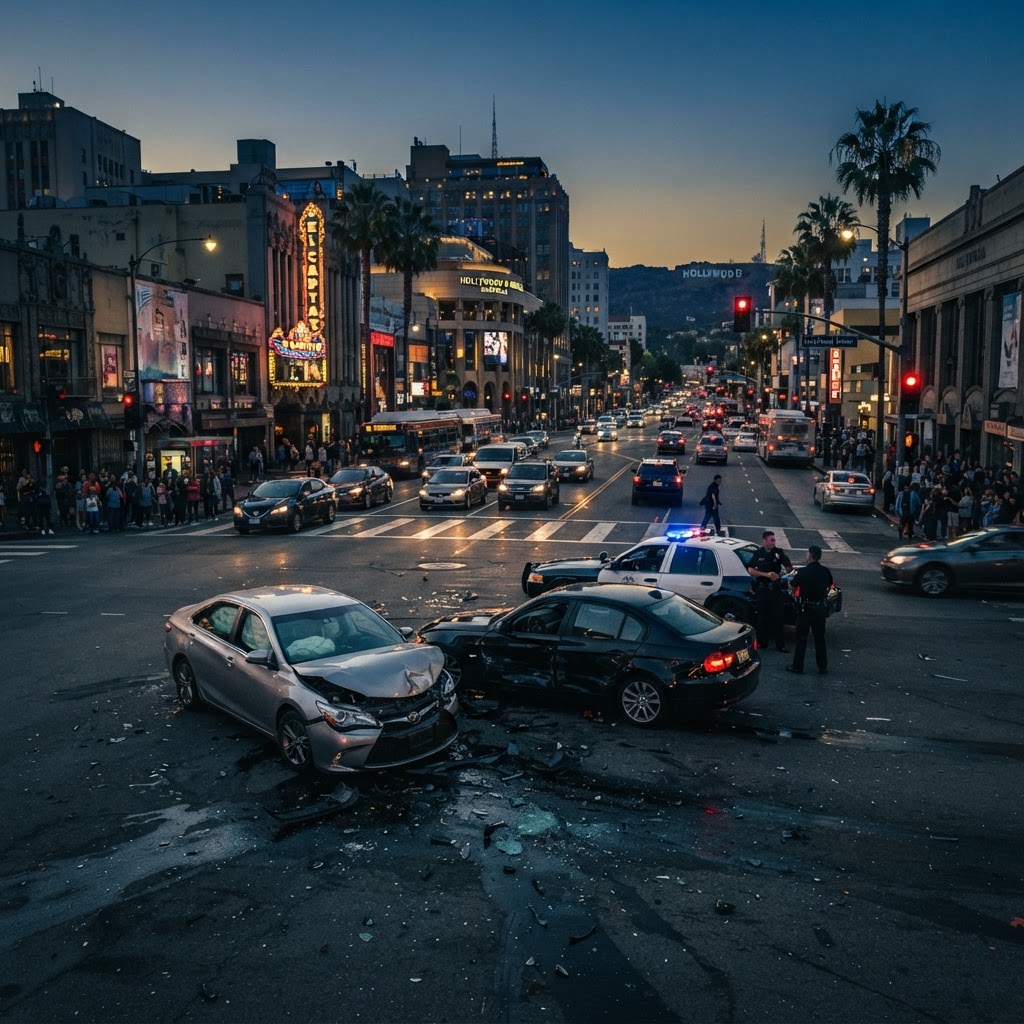
A head-on collision happens when the front of one vehicle strikes the front of another, usually because one vehicle has crossed into the lane of oncoming traffic. Because both vehicles are moving toward each other, the forces involved can be severe, and the injuries are often among the most serious that car accidents cause. In Los Angeles, head-on crashes happen on two-way surface streets, canyon and mountain roads, freeway on-ramps and off-ramps, and parking structure ramps, and sometimes on freeways when a driver enters going the wrong way.
If you were hurt in a head-on crash, you are probably dealing with serious medical treatment, time away from work, and a lot of uncertainty at the same time. California law generally expects drivers to stay on their own side of the road, and a driver who crosses into oncoming lanes without a valid reason may be responsible for the harm that follows. But responsibility is rarely as simple as it sounds. Often the only two people who know exactly what happened are the drivers, and one of them may be badly hurt or unable to speak.
Our founding attorneys spent years on the insurance defense side and inside a major auto insurer, so we know how these claims are evaluated from the other side of the table. Insurers look for ways to dispute which vehicle crossed the line, argue that the other driver faced a sudden emergency, or suggest that the injured driver contributed to the crash. We build the claim on physical evidence and data rather than on whichever version of events is told first.
Your consultation is free and confidential, and you pay no attorney's fee unless we recover compensation for you. We are available 24/7. If you or a family member was hurt in a head-on collision anywhere in Los Angeles or San Bernardino, call early so we can protect the vehicles, their data, and any video before they are lost.
From the other side of the table
How the insurer approaches a head-on collision claim
Disputing who crossed the line
When no one else saw the impact, the defense may claim that the injured driver was the one who drifted over. We look to skid and yaw marks, the final positions of the vehicles, debris, and vehicle data to show where each car was before impact.
The "sudden emergency" argument
A driver who crossed into your lane may say they swerved to avoid an animal, an object, or another car. Insurers lean on this explanation because California law may treat a true emergency differently. We test whether the emergency was real, and whether the driver's own speed, distraction, or tiredness created it.
Blaming the injured driver
Defense teams often look for any reason to assign part of the fault to the person who was hit, such as speed, lane position, or not braking in time. We use data from both vehicles and reconstruction work to answer those claims.
Early recorded statements
Adjusters may call quickly, while you are in pain or on medication, and ask for a recorded statement. What you say can be used to narrow the claim later. We take over those communications so you can focus on recovery.
Why it happens
Common causes
Drowsy or fatigued driving
A tired driver can drift across a center line without realizing it. Long shifts, night driving, and lack of sleep all raise the risk.
Impaired driving
Alcohol, drugs, or medications can slow reaction time and judgment and lead a driver into the wrong lane.
Distracted driving
Looking at a phone, a navigation screen, or anything else inside the car can take a driver's eyes off the road long enough to cross a line.
Unsafe passing
Passing on a two-lane road, on a curve, or over a double yellow line puts a driver directly in the path of oncoming traffic.
Wrong-way entry onto freeways
A driver who enters a freeway or ramp going the wrong direction can cause a high-speed head-on crash with little time to react.
Loss of control
Speeding, wet roads, sharp curves, or a sudden mechanical failure can cause a vehicle to leave its lane and cross into oncoming traffic.
Poor road design or conditions
Faded lane markings, missing signs, poor lighting, and confusing ramps may play a role, and a public or private owner of the road could share responsibility.
What we see
Injuries we handle
What you may recover
Compensation in a California claim
Medical expenses, now and in the future
Emergency care, surgery, hospital stays, rehabilitation, medication, and the expected cost of ongoing care, supported by your treating providers.
Lost income and earning capacity
Wages you lost while recovering, and the reduced ability to earn if your injuries limit the work you can do.
Pain, suffering, and loss of enjoyment of life
The physical pain, emotional distress, and changes to daily life that follow a serious crash.
Property damage and loss of use
Repair or replacement of your vehicle and the cost of not having it while you recover.
Wrongful death damages
For families who lose a loved one, compensation for lost financial support, companionship, guidance, and funeral expenses.
Punitive damages in appropriate cases
If the other driver acted with conscious disregard for the safety of others, such as some drunk-driving crashes, punitive damages may be available in appropriate cases.
The rules that apply
California law you should know
Drive on the right half of the roadway
California law generally requires drivers to stay on the right half of the road, with limited exceptions. A driver who crosses into oncoming lanes without a lawful reason may be at fault.
Vehicle Code § 21650
Double yellow lines
Drivers generally may not cross double yellow lines, with limited exceptions. Passing over them is a common cause of head-on crashes.
Vehicle Code § 21460
Violating a safety law can support negligence
If a driver violated a traffic safety statute and that violation caused the injury, the law may presume negligence unless the driver shows a valid excuse.
Evidence Code § 669
Pure comparative fault
If the defense argues you share some blame, compensation is reduced by your percentage of fault rather than barred.
Li v. Yellow Cab Co. (1975) 13 Cal.3d 804
Your own uninsured and underinsured coverage
If the at-fault driver has no insurance or too little, your own uninsured/underinsured motorist coverage may help.
Insurance Code § 11580.2
Two-year injury deadline
Most personal injury lawsuits must be filed within two years, but vehicle data and video can be lost much sooner.
Code of Civil Procedure § 335.1
General information, not legal advice. Deadlines and rules depend on the facts of your case, so talk to an attorney promptly.
Right now
Protect your claim
Evidence to gather
- The police or CHP collision report number and the investigating agency
- Photos and video of the vehicles, the road, skid and yaw marks, and debris
- Event data recorders (black boxes) in both vehicles, kept out of salvage
- Names and contact information for witnesses
- Dashcam, doorbell, business surveillance, and traffic camera footage
- Phone records and device activity for the other driver, where available
- 911 recordings and emergency response records
- Your medical records, bills, and proof of lost income
Mistakes insurers count on
- Giving a recorded statement to the other driver's insurer
- Letting your vehicle be repaired, sold, or sent to salvage before data is preserved
- Accepting a quick settlement offer before the full injury is understood
- Guessing about speed or lane position when speaking with anyone
- Skipping medical care or leaving gaps in treatment
- Posting about the crash or your injuries on social media
Step by step
How we handle your case
- 1
Listen and protect you first
We start with a conversation, explain your options in plain language, and handle calls from insurers so you do not have to.
- 2
Preserve the evidence
We send preservation demands for both vehicles and their event data recorders, request video and 911 records, and work with investigators before evidence is lost.
- 3
Reconstruct the crash
Where appropriate, we work with accident reconstruction professionals to analyze skid and yaw marks, points of impact, speeds, and lane positions.
- 4
Identify every source of coverage
We look at the other driver's policy, vehicle owners, employers if the driver was working, and your own coverage, including uninsured/underinsured motorist coverage.
- 5
Document the full impact of your injuries
We gather medical records and bills and, where appropriate, work with medical and financial professionals to show the long-term cost of your injuries.
- 6
Negotiate from strength or go to trial
We negotiate with insurers and file suit when necessary, preparing every case as though it will be tried.
From the Case Vault
Related results
Past results do not guarantee a similar outcome. Every case is different and must be evaluated on its own facts.
Straight answers
Frequently asked questions
Often the driver who crossed into the oncoming lane, because California law generally requires drivers to stay on the right half of the roadway. But fault depends on the facts. The other driver may claim a sudden emergency or may blame you, so evidence such as vehicle data, skid marks, and video matters.
Vehicle Accidents